
Desert hazards for dogs are part of life on Coachella Valley trails and Inland Empire washes. These are great places to walk a dog, but they come with a few dangers that surprise new owners. Here are the three we see most often, cholla cactus, foxtails and bees, and exactly what to do about each one.
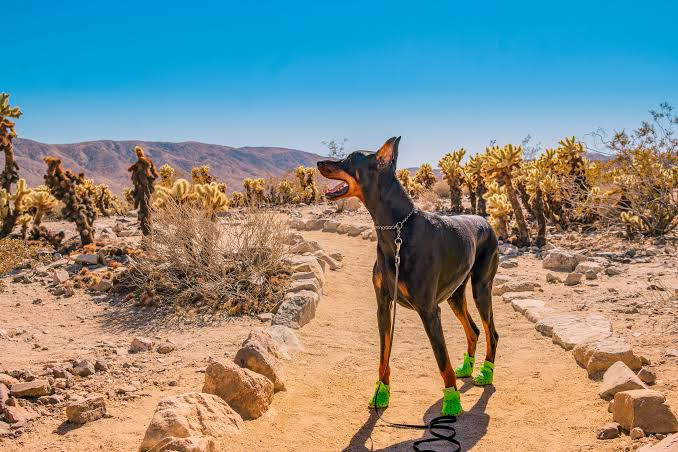
Cholla cactus: what to do if your dog gets stuck
Cholla segments break off at the lightest touch and grab onto fur, paws and faces. Dogs often make it worse by biting at the segment and getting spines in their mouth.
- Keep your dog still. If you can, have a second person hold and calm them.
- Don't use your fingers. Slide a wide-tooth comb between the cactus and the skin, then flick the segment away from both of you.
- Pull out the remaining spines one at a time with tweezers or forceps, along the angle they went in.
- Treat each spine hole as a small puncture wound. Watch it for redness or swelling over the next few days.
- Leave spines near the eyes or inside the mouth to your veterinarian.
We keep a small comb and a pair of tweezers in our training bag for exactly this. To prevent it, keep your dog on the trail and on a short leash near cactus, and teach a strong "leave it."
Foxtails: small seeds, big problems
Foxtails are grass seeds with barbed tips. They only work their way in one direction, deeper, and they don't come out on their own. Vets have found them in ears, noses, eyes, paws and even lungs. They're most common in dry, weedy patches in late spring and summer.
Signs to watch for:
- Paws: limping, swelling or constant licking between the toes
- Ears: head shaking, tilting or scratching
- Eyes: squinting, redness, swelling or discharge
- Nose: sudden, intense sneezing
Check your dog after every walk through dry grass. Look between the toes, inside the ears and around the face. If you find a foxtail that's embedded, or the area is red or swollen, call your vet. During foxtail season, steer around weedy patches and keep long coats trimmed around the feet and ears.
Bees: stings and swarms
Most stings land on the face or paws, usually because the dog was investigating a bee. Southern California has Africanized honey bees, which defend their nests aggressively. A single sting from one is no more dangerous than a regular bee sting, but a swarm can deliver many stings at once.
- If bees are swarming, get yourself and your dog away fast. Don't stop to swat.
- Scrape a stinger out with a fingernail or the edge of a card. Don't squeeze it with tweezers.
- Go to the vet right away for multiple stings, swelling of the face or throat, trouble breathing, vomiting or weakness.
Check your yard, walls and planters for hives, and have a pest professional remove any you find. Don't try to remove a hive yourself.
A quick desert walk checklist
- Walk in the cooler hours and bring water for both of you.
- Keep a short leash near cactus and brush.
- Pack a wide-tooth comb and tweezers.
- Check paws, ears and face when you get home.
- Know where your nearest emergency vet is before you need one.
Frequently asked questions
How do I get cholla cactus off my dog?
Keep your dog still, then slide a wide-tooth comb between the cactus segment and the skin and flick it away from both of you. Remove leftover spines one at a time with tweezers, and leave anything near the eyes or inside the mouth to your vet.
Will a foxtail come out on its own?
No. Foxtail seeds are barbed and only move deeper. If you see one embedded, or notice sudden sneezing, head shaking, squinting or licking between the toes after a walk, call your vet.
What should I do if my dog is stung by a bee?
Scrape the stinger out with a fingernail or a card and watch your dog closely. Go to the vet right away if there are multiple stings, facial or throat swelling, trouble breathing, vomiting or weakness.
What other desert dangers should dog owners know about?
Heat and rattlesnakes are the two biggest. Walk in the cooler hours, and consider rattlesnake avoidance training before spring, when snakes become active.
Rattlesnakes are the other big desert hazard. Our Rattlesnake Avoidance Training teaches dogs to steer clear of snakes, and our Real-World Obedience program builds the loose leash, recall and "leave it" that keep trail walks safe. We work with families in Palm Springs, Indian Wells, La Quinta, Rancho Cucamonga and beyond. Book a free evaluation.